

In this article, Minh-Chau Le shares how her ancestral heritage is woven into her work as a historian and her journey as a member of the Order of Interbeing.
This year, 2026, we are celebrating 60 years of the Order of Interbeing. After our legendary June retreat in Plum Village, France, we will continue our monthly offering in which we feature articles written by an OI member, highlighting different voices in our beloved OI community.
Minh-Chau Le’s article was originally published in the Mindfulness Bell, No. 97.
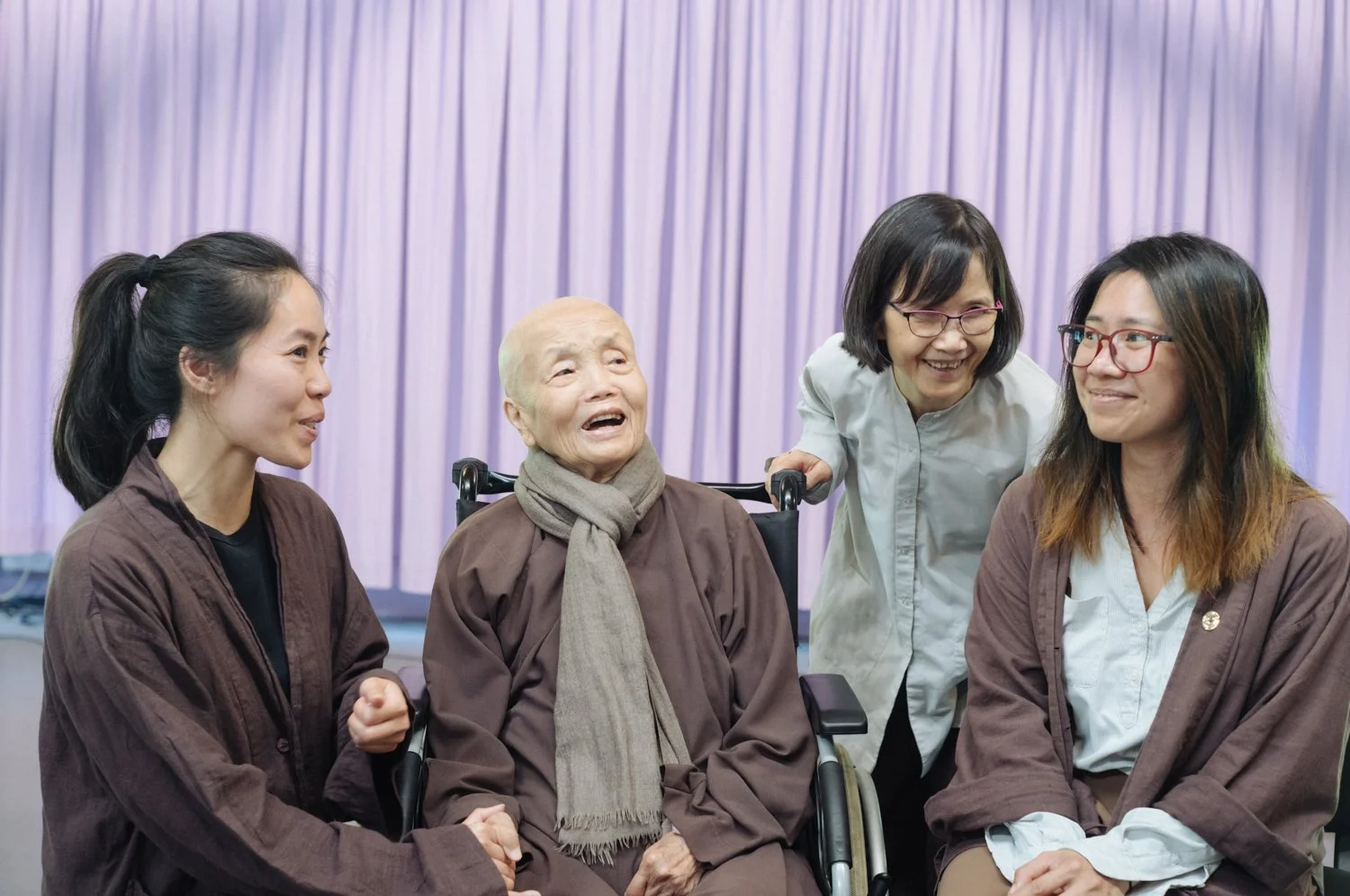
I learned to read Vietnamese as a child by sitting next to my mother and following along as she chanted sutras in the evenings. We would sit on the floor of our altar room with a book open in front of us, surrounded by dancing shadows and the smell of incense, under the gaze of smiling Buddhas and stern-faced portraits of grandparents I had never met. I didn’t know it then, but those evenings were my first steps toward mindfulness practice and the Order of Interbeing.
My ancestral heritage entered my life through Buddhism. In my childhood, the small yet vibrant Vietnamese temple community in Raleigh, North Carolina, US was like my extended family, with whom I spent every Sunday and celebrated every Vietnamese holiday. In the summers, as a teen, I would fly off to Deer Park Monastery in southern California where I would work, play, study, and meditate with monks and nuns who shared my heritage. These communities taught me how to embrace the things that made me different; they showed me true happiness and helped me to understand my place and purpose in the world.
What does it mean to be the Order of Interbeing in 2026? I believe it means being willing to evolve while staying rooted in timeless principles. It means creating sanghas that welcome people of all backgrounds while honoring the depth of Buddhist tradition.
I am among the first generation of my family to be born in the United States after my parents’ uprooting from Vietnam. As the daughter of war refugees, my very existence is made possible by fraught histories of violence and oppression—and also by the miracle of survival, resettlement, and new beginnings. The more I consider the turbulent history that brought my family—and this practice—to US soil, the more I appreciate how miraculous it is that I am here, continuing this spiritual tradition on the opposite side of the planet. For me, the practice has always been a channel through which I can connect with my ancestors, drawing on their centuries of experience and wisdom as I find my way through life.
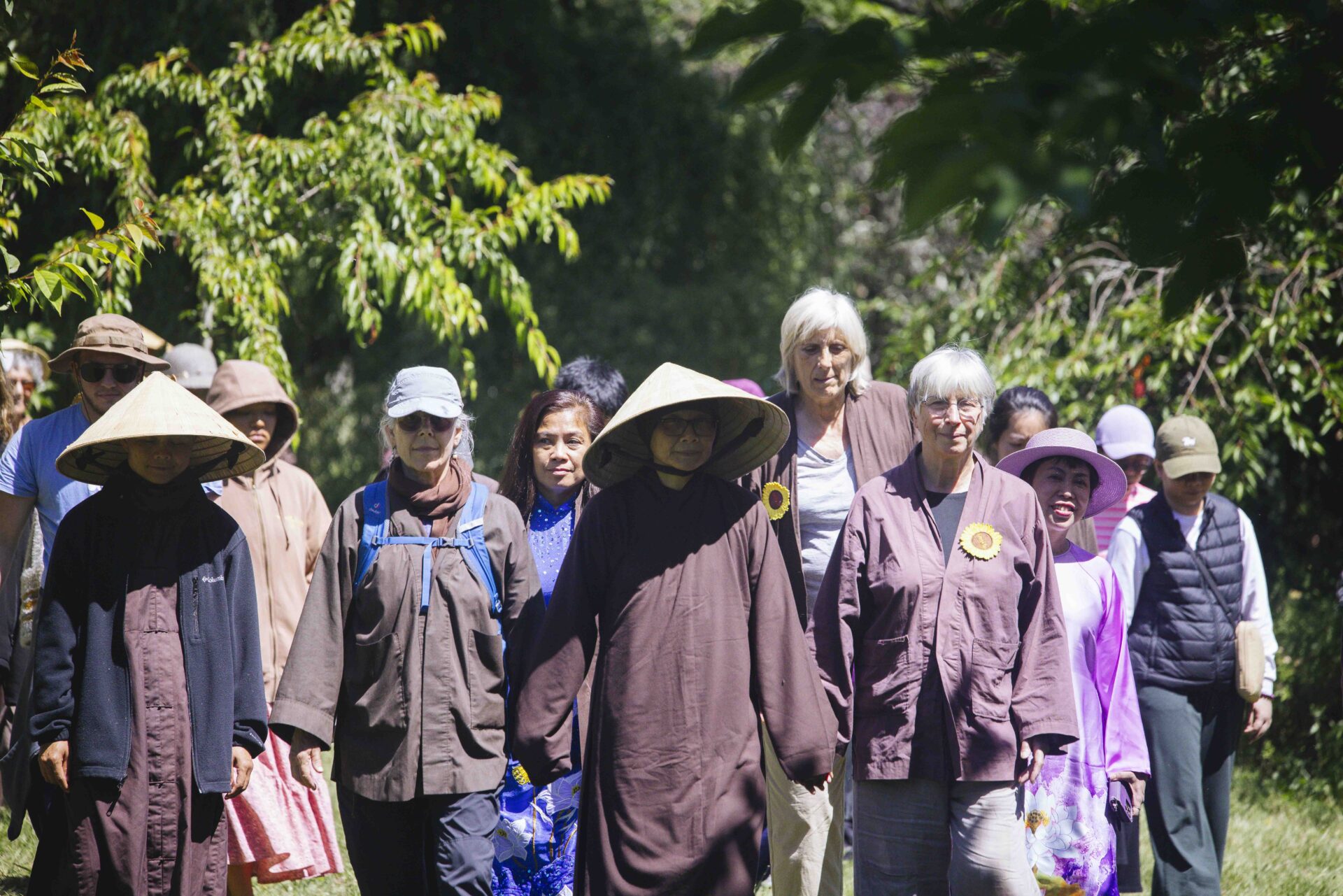
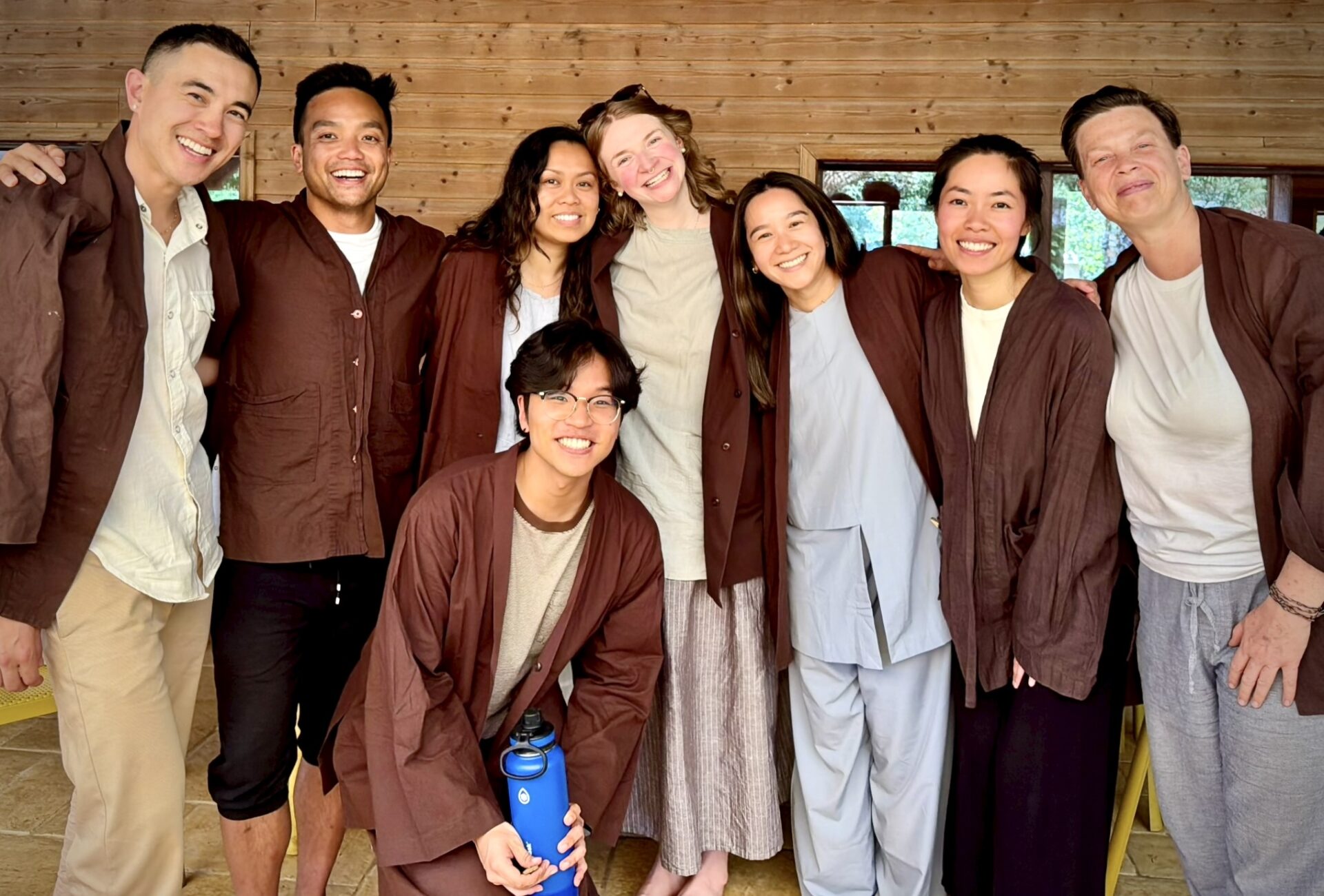
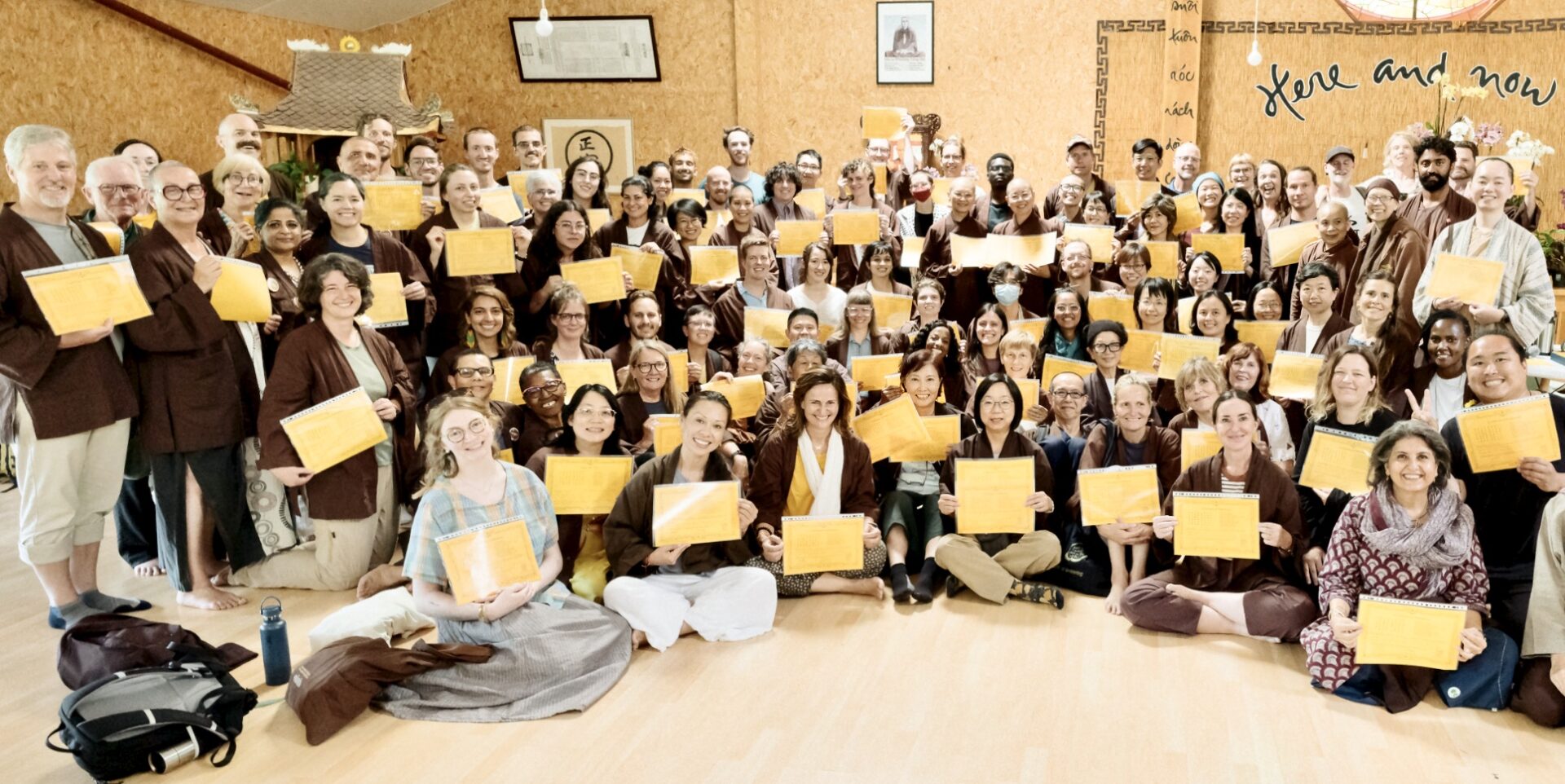
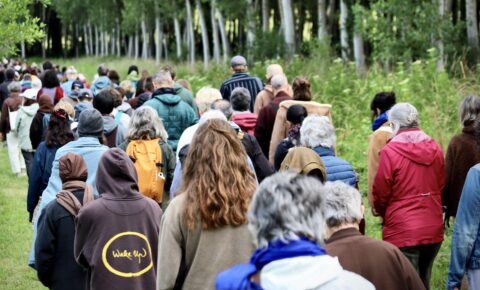
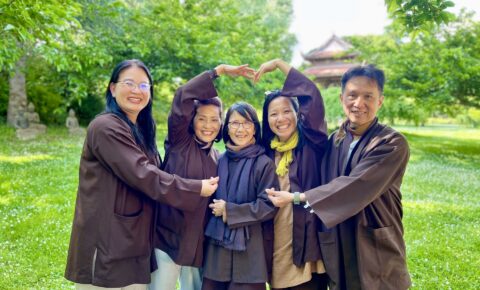
I felt the full weight of this ancestral connection on the day I was ordained into the Order of Interbeing in the fall of 2017. After the early morning ceremony at Blue Cliff Monastery, I was given a brown jacket—hand-sewn by an elder OI auntie—along with little gifts from Dharma teachers expressing their love and support: a white seashell shaped like a heart, a bead bracelet made of pink stones, and a small notebook with an image of the Buddha. We walked in meditation together through the forest, enjoying the fresh autumn air. Walking on that path, holding my parents’ hands on either side of me, I felt more connected to the universe than ever before. Looking at the ferns covering the forest floor, I thought, These ferns are my ancestors, and tears of happiness welled up in my eyes. Now, every time I see a fern plant, I feel the echoes of that precious moment and I smile to my ancestors.
My aspiration in this life is to be a healing connection between the past and the future. I see myself as a bridge between countless past generations of Buddhists rooted in Vietnam, and countless future generations of spiritual seekers taking root in other parts of the world. As a historian specializing in modern Buddhism and the Vietnam War, my work is to research and hold what has come before us, and to write about it in a way that helps us heal. I want my telling of history to deepen our understanding of ourselves and our connection to the wider world.
This calling to serve as a bridge between history and possibility is inspired by Buddhist practitioners of earlier generations who have carried the Dharma through times of upheaval. Our spiritual ancestors held onto the Dharma as they found their way through colonialism, war, and the building of a new nation. They resisted the division and violence that dominated society, running toward the places where people suffered most and offering aid and compassion without regard to political affiliation. As one Buddhist social worker wrote from the field in 1972, their calling was simply “to be with human beings facing this huge war machine.” That presence in itself was a radical act of defiance; it was the living Dharma. It was in this spirit that Thầy founded the Order of Interbeing in 1966, creating a formal structure for practitioners to embody these values in community.
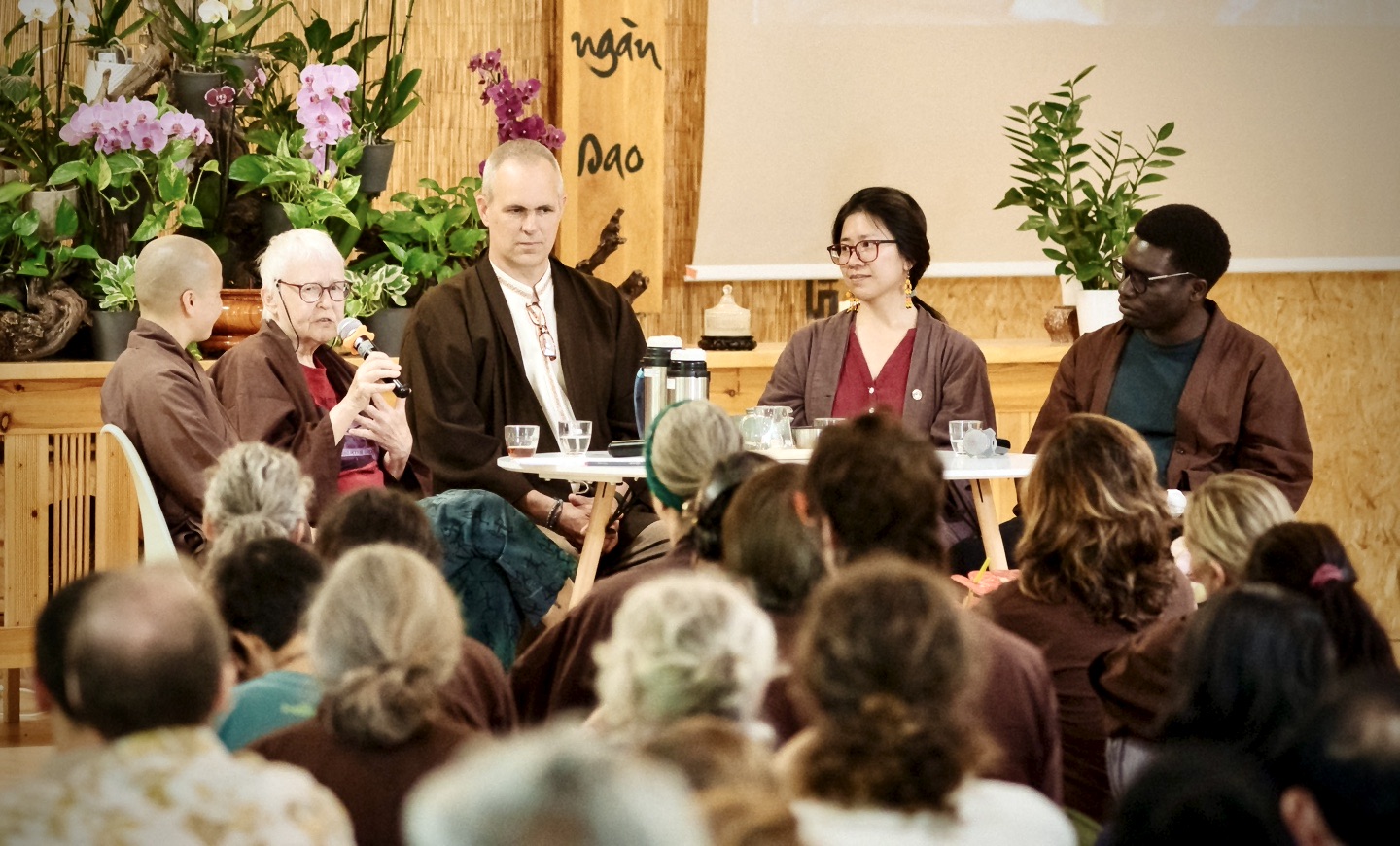
As I reflect on the sixtieth anniversary of the Order of Interbeing, I see both continuity and transformation. Thầy founded the Order during the Vietnam War with fourteen trainings that called for practitioners to engage with the suffering of their time while maintaining deep spiritual roots. Sixty years later, we face different challenges, but the same fundamental call remains: to be present with suffering and to respond with wisdom and compassion.
The Order has grown from a small group of young Vietnamese social workers to a global community spanning continents and cultures. Despite our diverse backgrounds, we are united by our commitment to The Fourteen Mindfulness Trainings and our aspiration to create a more compassionate world. Some of us, as I do, carry the practice through our ancestral heritage; others have found it while seeking relief or meaning in life. What does it mean to be the Order of Interbeing in 2026? I believe it means being willing to evolve while staying rooted in timeless principles. It means creating sanghas that welcome people of all backgrounds while honoring the depth of Buddhist tradition. It means using both ancient practices and modern means to address today’s challenges. Most importantly, it means embodying the teaching that we are here not just for our own liberation, but for the liberation of all beings.
As we look toward the future, my hope is that the Order of Interbeing will continue to be what it has always been: a community that demonstrates another way of being in the world. In a time of unprecedented global challenges, we have the opportunity—and responsibility—to show that cultivating wisdom, compassion, joy, and interconnection is not just a beautiful ideal but also a practical response to the crises of our time. May we be ancestors that future generations will be grateful for, carrying the Dharma with the same courage and dedication as those who came before us.
We invite you to read Minh-Chau Le’s original article in the Mindfulness Bell, No. 97 and to enjoy more articles from that recent edition here.
Share Your Reflections