
As we celebrate 100 years of Thich Nhat Hanh on his continuation day, we feature some reflections from The Way Out Is In Podcast in their 100th episode earlier this year, asking: What made Thay different? What did he leave us with? And how can we apply it to the polycrisis here and now?
Thay’s Bodhichitta
Jo Confino: What was the essence of Thay that allowed him to create and have this enormous influence in the world?
Sister True Dedication: Well, it’s clear that Thay had an extraordinary bodhicitta, that mind of love, that wish to serve. Because as well as his freedom, his awakening, his peace, and his wonder of being alive, he could have chosen to live in a hut on a mountain and enjoy his ease and awakening. But he had such a wish to relieve suffering. And I find that really extraordinary in him— that he never gave up on using every day, every minute, every moment to relieve suffering in all of its dimensions, including by modeling a way of being while relieving suffering.
So, I think that Thay’s bodhicitta really sets him apart from many, many other leading spiritual figures; perhaps in that he was relentless in his creativity and his determination to relieve suffering and to find universal paths out of suffering.
And I think also something that sets him apart is that he didn’t just offer the Buddha Dharma for the Buddha Dharma’s sake. He wasn’t interested in the success of Buddhism per se. He wanted humanity to be a better species. And he wanted human actions to not bring so much suffering to other humans and to the planet.
And that’s one of Thay’s, I think, most extraordinary insights is that we should be ready to let go of all our views and all our attachments, even our views and attachments to Buddhism. And so he transcended even Zen and Buddhism. And he was just, I think, an extraordinary human who wanted to share and develop practices and ways of being in the world through mindfulness, through the 5 Mindfulness Trainings, the 14 Mindfulness Trainings—very concrete ways that humans could cultivate ourselves to be better humans. And I think that really is quite an unusual legacy for a Zen master.
Thay Was His Own Person
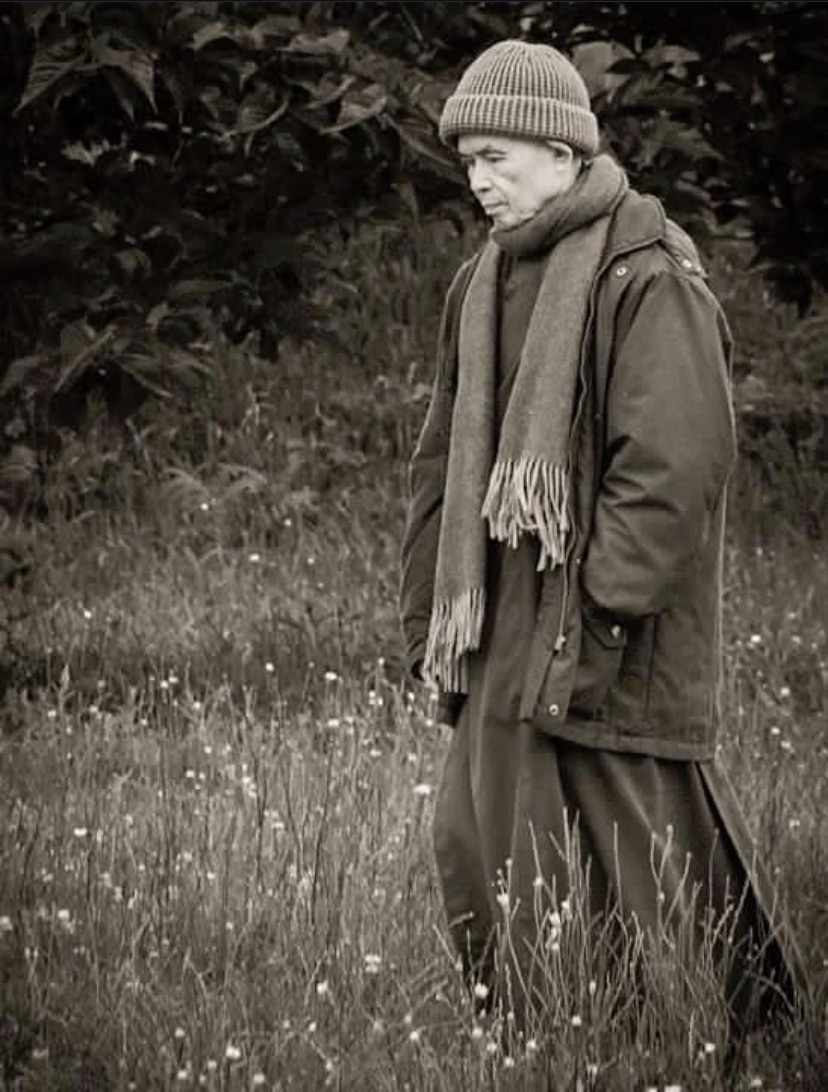
In terms of Thay’s person, I think what I always found so extraordinary about Thay when I was in his presence, when we were sitting drinking tea, learning and studying with him, or taking action with him, Thay was so much his own person. He was such a free spirit.
He was so unshakably himself. He had totally broken through, broken free from any kind of people pleasing.
I remember Thay saying once that the smile of mindfulness that you often hear in many of his teachings or even the Plum Village songs—the importance of smiling. And in quite a few talks, he would really say it is not a diplomatic smile. This is not a fake smile. This is not a smile to make other people happy. It’s a smile of freedom. It’s a smile of ease. It’s a smile between you, yourself and the world—the cosmos.
And I think Thay had that incredible freedom from not wanting to please anyone. And he was so much his own person. He was an extremely polite and humble person, but he would walk only at his own pace. He would enter every room on his own terms. He would encounter all these extraordinary, sometimes influential, powerful, and famous people, but as himself. He never yielded, he never gave ground. And for me, that was his Zen master part. That was his total freedom. He had broken free from this social mores pantomime. He just was a straight, serious, no messing around human, who was in the business of relieving suffering and in the business of helping humans be better humans.
Simplicity and the Great Foundation Thay Has Given Us
Jo Confino: Some people have said Thay’s teachings are too simplistic. And I find that very hard to digest, because from my perspective, he’s made them so accessible. And it’s like he’s taken all this complexity and boiled it down to the essence and then shares it in a way that it can just enter my system so easily. So, what is it about Thay—because he could have just studied sutras and given very complex treaties and translations—that he chose to speak to people’s hearts? Can you tell us more about that?
Brother Phap Huu: I think that is one of the greatest gifts that he has given to me personally, and then to so many friends and folks who have had the chance to read his books or be in touch with his Dharma talks or come to a retreat. Because I can just say outright, I wouldn’t even be a monk if it wasn’t for Thay. Buddhism was never in my priority list in my childhood of like, ohhh, Buddhism is so cool. Buddhism was not cool. Only when I came to a retreat, when I was like, whoa, this is something very profound.
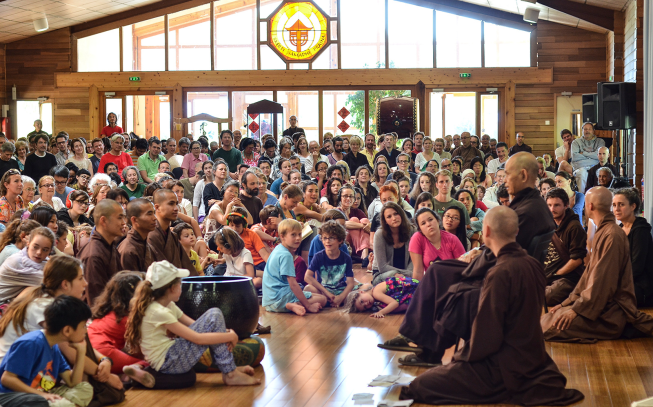
In my own experience, we all seek understanding. It’s just something that we want to be able to grasp. When I heard him speak, even though I didn’t understand the depths of it; but his tone and his way of just showing up, it wasn’t colorful. He didn’t need a stage with thousands of flowers and an altar behind him, a big Buddha behind him. He just wanted to show up as a simple person. And that, for me, is something that he goes back into the ancestors, looking at the Buddha, how simple the Buddha was…
What Thay was doing, what I felt for Buddhism as a whole, was to go way back to how the Buddha taught. And in all of the Buddha’s Sutras, the Buddha has always said: “my teaching is to understand suffering, to be free from suffering, and to transform suffering.” That is the core of the teachings, the essence of it. To understand that layer, that means to understand what is happiness, to understand what is peace, to understand what is wellbeing.
Thay, on a level of teaching, seems simple, because he himself has been able to transform. And therefore what he says, is spelled out, because Thay is showing there’s no myth to this. This is what you do and this is what you can do.
One of the powers I feel when I listen to him is that he gives us the agency of, if you put these practices into your daily life, if you authentically do it, you won’t be the same person. You will be a different person.
Continuing Thay in a Time of Polycrisis
Jo Confino: Can you place Thay’s teachings in this moment—people are saying this is not an era of change, it’s a change of era—and how in a sense can Plum Village and the teachings come in to support these very difficult times?
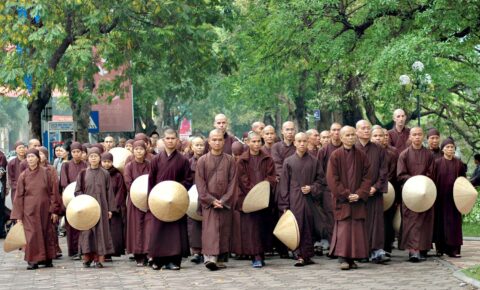
Sister True Dedication: I think our main role is to be a community of resistance—a lived, residential, simple, happy community of resistance to the mainstream direction, whatever that means… and the primary direction that Thay gave us was: “Be a community of simplicity, of peace, of awareness, and of embracing suffering. Be that community.”
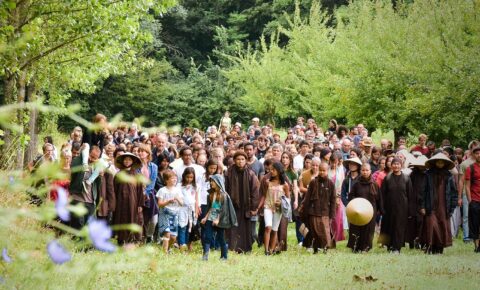
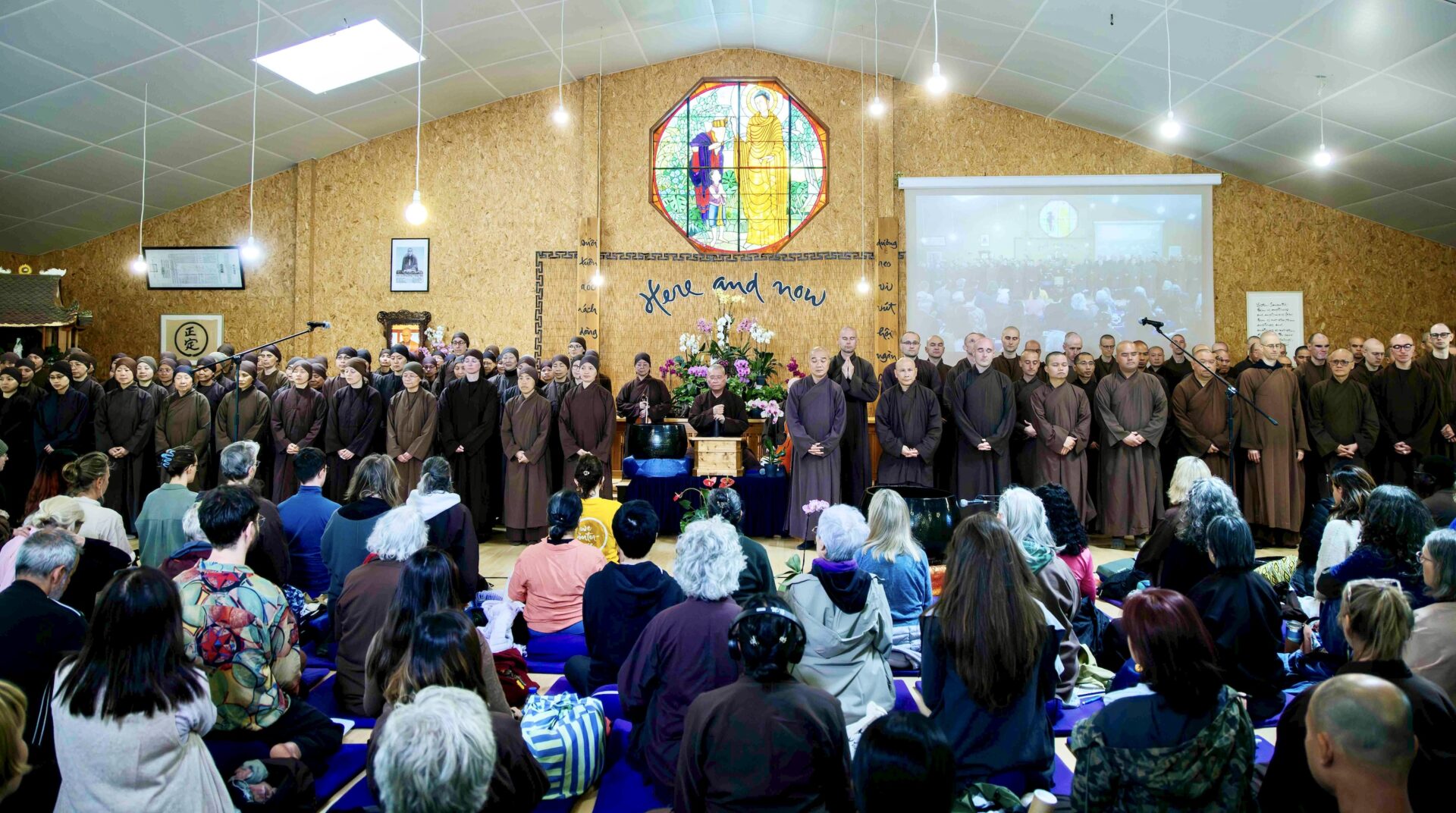
And what that means for us is that we are hundreds of people in the countryside—in our high season, we go up to well over a thousand people—and we live our hours and our days with an energy of mindfulness, an energy of siblinghood or fraternity of solidarity. We live lightly on the earth, as ecological, organic, vegan, as possible—no toxins, no alcohol.
We look deeply and step outside of the rat race in order to have a fresh perspective on it. And I think that distance from the world is really important to cultivate a fresh outlook and to not feel that everything—that inertia and that momentum of everything—is so unstoppable… So, I think that is one of our first missions: is to embody a way of living that is happy, harmonious, and different. And then to hold that light for future generations—outside of the rat race…
And then it is that monastic community that is then the refuge for everyone who can then come and take sanctuary here to be able to step outside, whether it’s for a week or three months or a year—to be able to step outside and share this perspective with us, where we can have a different take on these different crises that are happening.
And all the crises are human crises, and if we don’t understand human nature, we won’t be able to get to the bottom of those crises.
Where is the rampant consumerism coming that is fueling all of this wild economic, imperialistic, extractive, exploitative behavior by nations and corporations? That’s a human nature problem. And here we are studying what it means to understand our own human nature and how humans are. How do we transform greed and craving? How do we transform habits? How do we transform the tendency to hide ourselves in consumerism?
We are learning that at an individual, personal, human, communal scale here in Plum Village and that is helping us have courage to speak to the problems in the world, because we see it clearly. Difference of culture, language, beliefs, views, creed and how that leads to violence, to discrimination, to destruction, to oppression. We’re seeing it on a small scale here and that helps us be able to speak to a path of non-violence in the world.
So, in terms of what is our role in this moment? I think our role is to continue to be a community that embodies a different way of living and being and doing.
Dear beloved global community, we know that you are there, continuing Thay through every mindful step and every mindful breath in all that you do, and we are so happy and grateful.
In addition to The Way Out Is In podcast, we would like to share some of the many ways that we, as a multifold community, are continuing Thay through all our different offerings. We hope that you will find these resources beneficial in nourishing your bodhicitta, finding community (sangha), staying connected and becoming involved, and cultivating the understanding, love, compassion, and insight needed to transform and heal our individual and collective suffering for peace, love, and happiness to blossom in our hearts and the world.
- Who is Thich Nhat Hanh? Online Course: 11 October, 2026 – 31 January, 2027
- Zen and the Art of Saving the Planet Online Course: 18 October – 6 December, 2026
- Living Gems: The world’s largest collection of Thich Nhat Hanh’s teachings
- Plum Village App
- Plum Village youTube
- Parallax Press
- Thich Nhat Hanh Foundation
- Plum Village Retreats
- Plum Village Practice Centers
- International Plum Village Sanghas