
In this sharing, we explore the ongoing journey of inclusion for LGBTQIA+ siblings in Plum Village France. Through personal reflections on community life and applied practice, Brother Bao Tang (Brother Treasure) looks at both the meaningful progress that has been made and the conditions that continue to invite deeper understanding, compassion, and growth.
This article is also available in Bahasa Indonesia, Deutsch, Español, Filipino, Hindi, Italiano, عربي, 日本語, 简体中文, 繁体中文, Portugués, Thai, Nederlands.
The Global Landscape of LGBTQIA+ Rights
Sometimes, I wish that we no longer needed to discuss LGBTQIA+ issues in 2026. Queer presence has been a part of human history since ancient times; and now, in many parts of the globe, it has been seamlessly integrated into daily life. However, the reality happens to be far less simple.
The global landscape of LGBTQIA+ rights is currently marked by a stark paradox: it is rapidly advancing and moving backward simultaneously, depending entirely on geography, politics, and the specific facets of identity in question. According to the ILGA-Europe Rainbow Map and Index, human rights organizations and researchers increasingly describe this era as a period of profound polarization—a “crossroads” where unprecedented progress in the recognition of LGBTQIA+ rights has triggered an equally intense global backlash. Within this changing social landscape, spiritual centers such as Plum Village offer refuge.
Plum Village France: Embracing LGBTQIA+ Siblings
Plum Village has moved forward significantly, standing out as one of the major spiritual communities that truly embraces LGBTQIA+ practitioners as part of the global family. Yet, paradoxical realities coexist alongside this progress, and our LGBTQIA+ siblings still face moments of exclusion due to a variety of complex conditions.
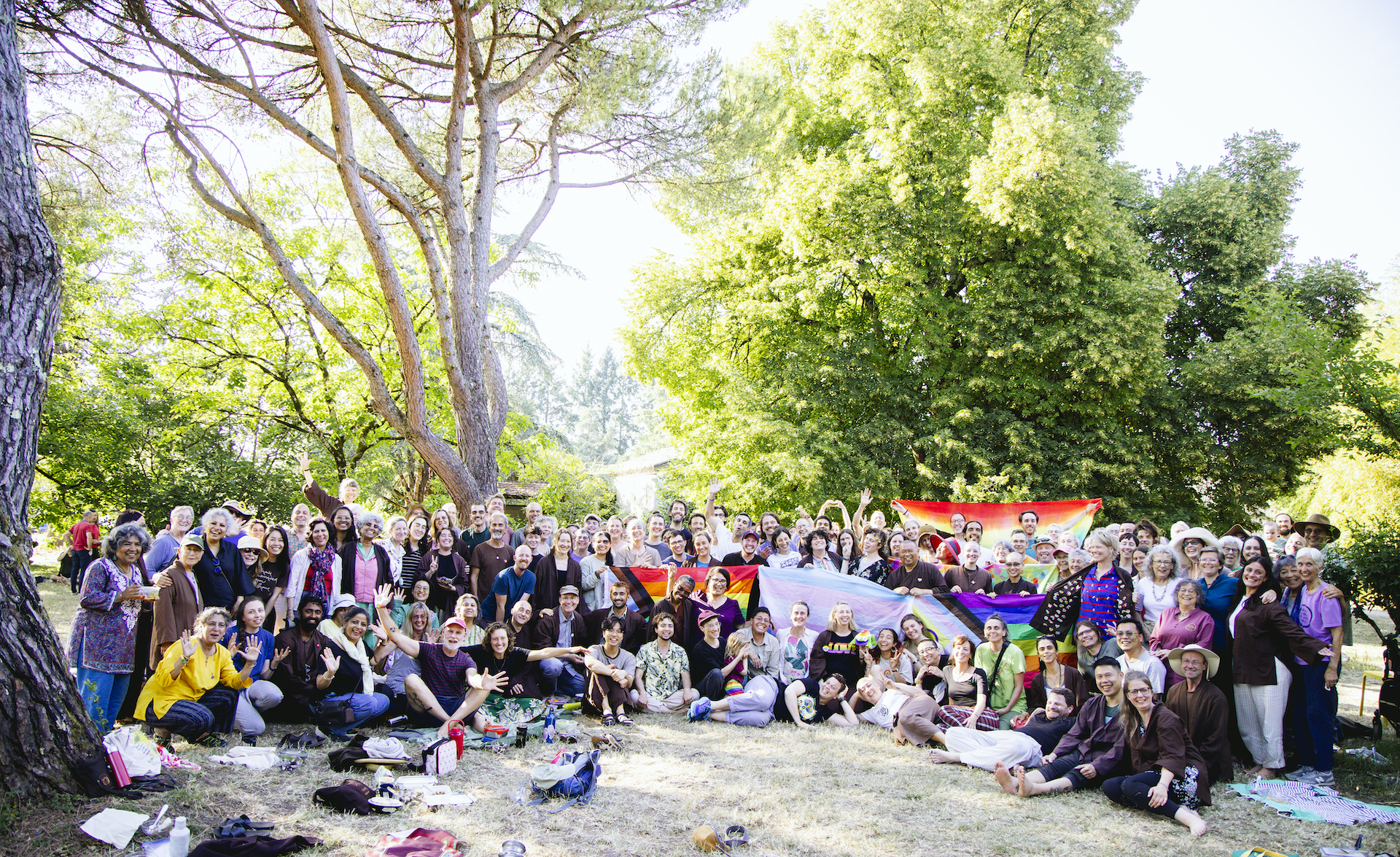
For the last ten years, Plum Village France has consistently offered LGBTQIA+ affinity activities across many retreats, including Dharma Sharing circles. The Registration Office has vastly improved its inclusivity regarding gender options, and many Dharma Teachers have successfully integrated more inclusive vocabulary into their teachings, including updates to the Five Mindfulness Trainings and the Fourteen Mindfulness Trainings. However, these institutional steps alone do not automatically guarantee the absolute safety of either our LGBTQIA+ lay practitioners or our monastic brothers, sisters and siblings.
As a community, Plum Village practices non-dogma, non-attachment to views, and freedom of thought. These three core practices allow everyone the space to think differently; no one can force another person to adopt their specific viewpoint. This spirit allows every member of our community—both lay and monastic—to grow naturally and organically through open communication, empowered by compassionate listening and loving speech. We have indeed received heartfelt compassionate feedback and constructive suggestions from our lay practitioners through all different gatherings, including fire-building sessions. Yet, because our growth is organic and natural, the pace of change may not always happen as quickly as expected.
Feeling Safe and Insecure at the Same Time
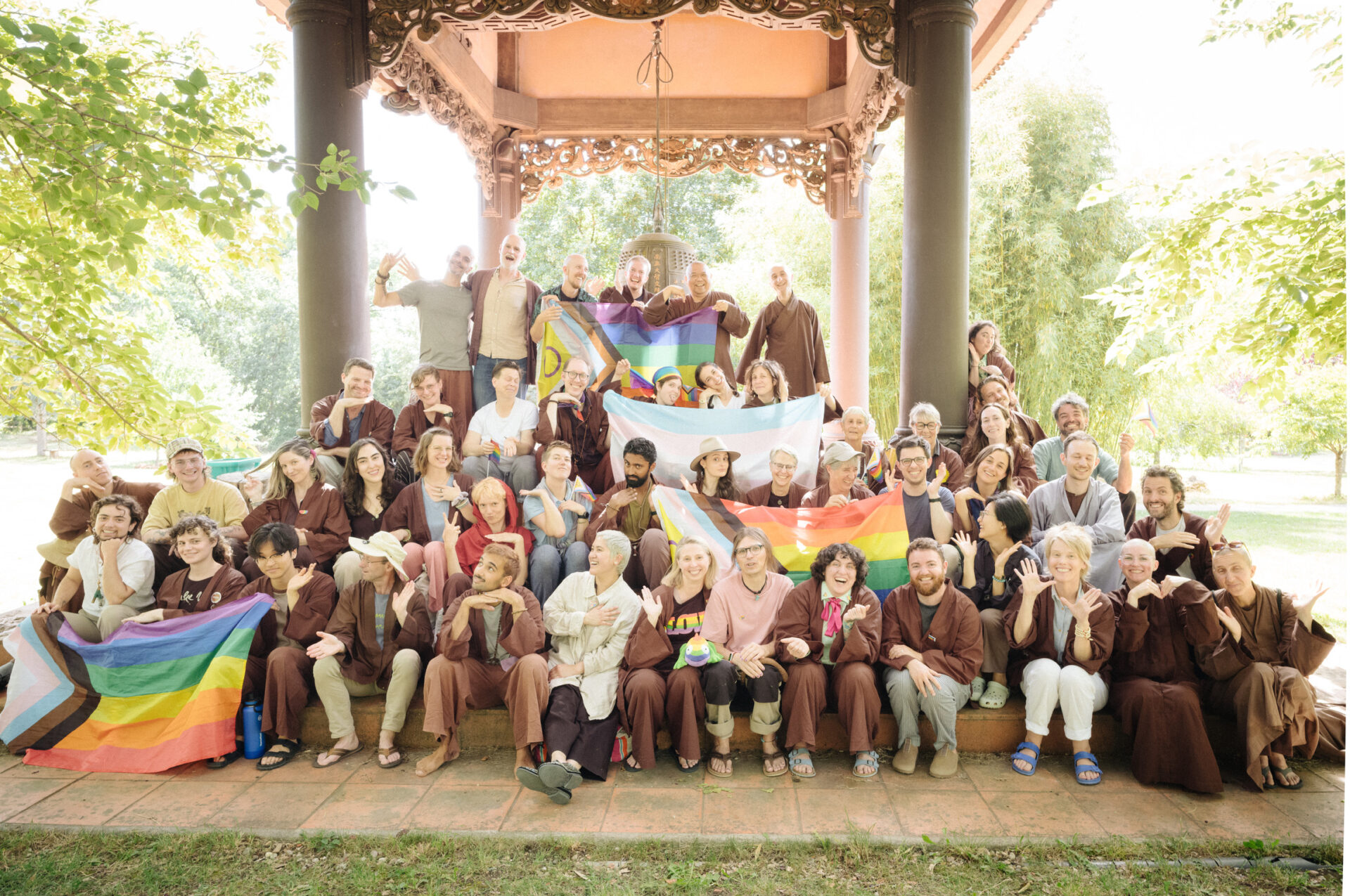
Plum Village may seem safe at first sight for LGBTQIA+ siblings; queer practitioners are welcomed. Still, each person experiences Plum Village differently later on. Some continue to feel safe, while others do not. Numerous conditions within the monasteries can still trigger feelings of insecurity for our LGBTQIA+ siblings.
Crucially, this insecurity is experienced on both sides—by the monastery and by LGBTQIA+ siblings alike. Just as practitioners may struggle to feel accepted, the monastery may be uncertain about how to welcome LGBTQIA+ siblings without accidentally excluding them and causing harm. These organic mutual vulnerabilities are precisely what slow down the pace of growth. In my humble opinion, based on personal experience, both sides must continue to show up and be fully present for one another, no matter what conditions we face. This mutual presence allows the monasteries to continuously improve their heartfelt embrace of LGBTQIA+ siblings in their teachings, accommodations, and rituals. The monastery should commit to offering teachings and compassionate spaces without worrying too much about saying or doing something wrong, while LGBTQIA+ siblings continue to show up with courage. This is not meant to pressure our LGBTQIA+ siblings; I recognize that many possess immense inner strength, compassion, and stability in the practice. By having the courage to show up, the community can improve more rapidly.
As an openly queer monk in the Plum Village global community, I feel super safe within myself, but my other queer monastic siblings may not feel the same. This depends on our backgrounds, our understanding of ourselves and the community, and our inner freedom on our own queerness. Based on the three core practices of non-dogmatism, nonattachment to view, and freedom of thought, as mentioned above, I am able to live harmoniously with unconscious homophobic and transphobic siblings through deep looking and understanding within myself and them. Some queer siblings may also carry internalized homophobia and transphobia. Understanding is love.
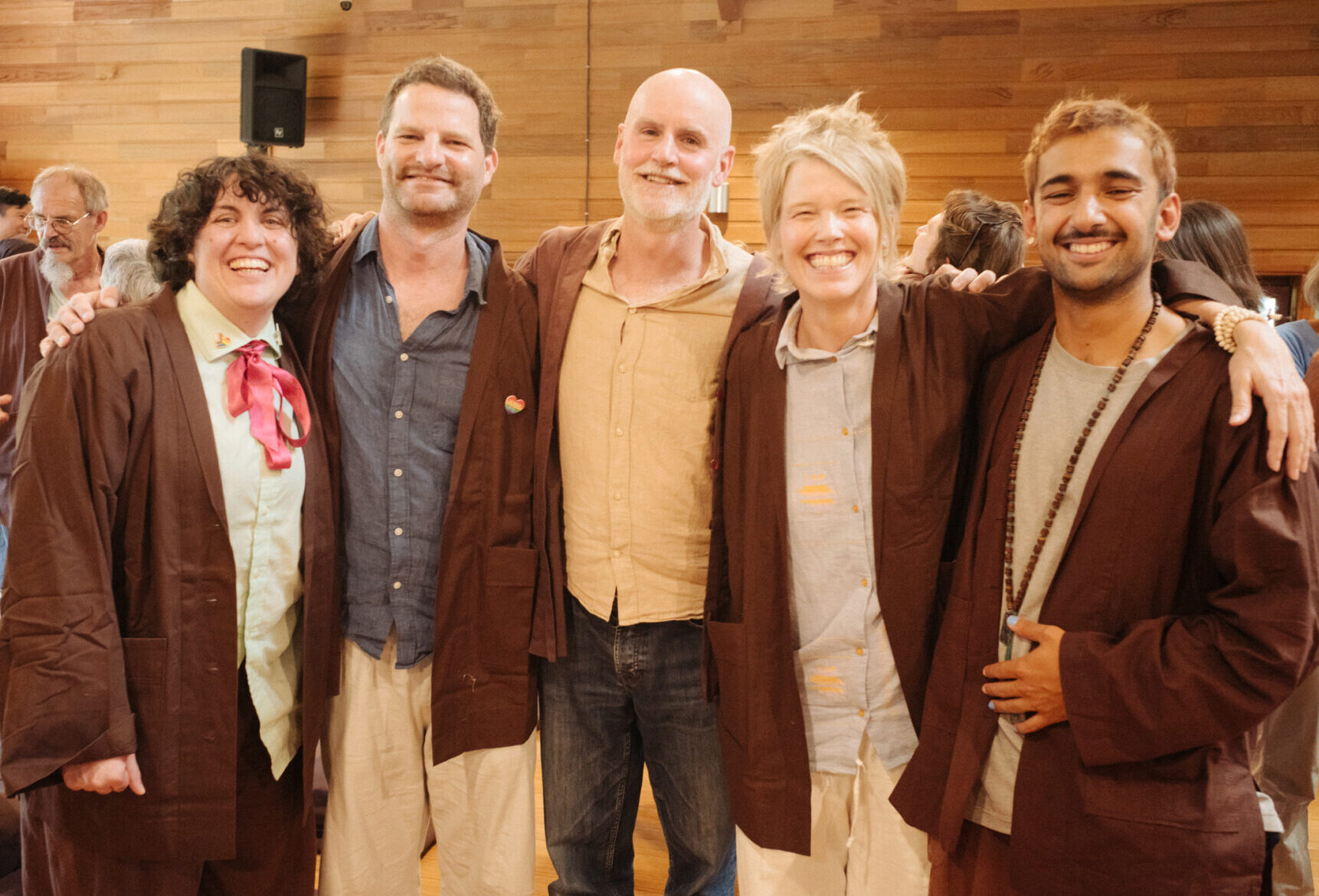
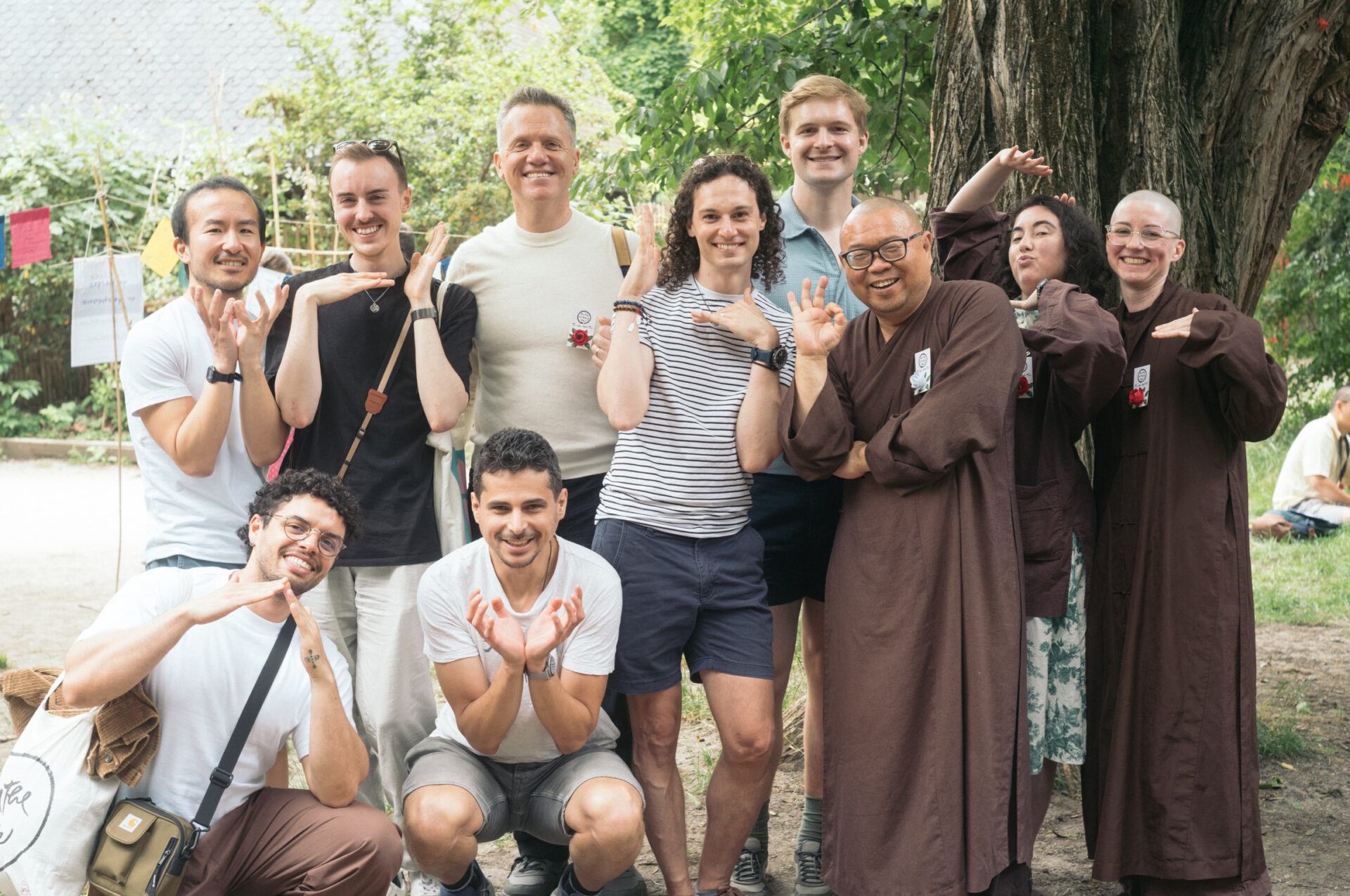
I am very proud of my straight, cisgender monastic siblings’ support, because I have had almost nothing to do with the improvements to the Five Mindfulness Trainings and the Fourteen Mindfulness Trainings texts, accommodation reservations, or teaching language. These all happened because of them. Due to the presence and visibility of queer siblings in the Sangha—both lay and monastic—many of our straight, cisgender monastics have become strong allies. Even if most do not have a deep understanding of LGBTQIA+ vocabulary and context, they have the heart of a Bodhisattva. Today, all affinity Dharma Sharings are organized by our monastic allies. Most monastic siblings are allies, though they sometimes feel insecure accompanying queer practitioners because they fear saying something incorrect, or being accused of causing harm.
The Spirit of Buddhism is Inclusiveness
At its deepest level, the question of inclusion is a matter of seeing ourselves and one another deeply. The following response from our teacher Thầy offers a powerful foundation for this understanding.
Looking deeply into the nature of a cloud, we see the cosmos. A flower is a flower, but if we look deeply into it, we see the cosmos. Everything has a place. The base—the foundation of everything—is the same. When you look at the ocean, you see different kinds of waves, many sizes and shapes, but all the waves have water as their foundation and substance. If you are born gay or lesbian, your ground of being is the same as mine. We are different, but we share the same ground of being. The Protestant theologian Paul Tillich said that God is the ground of being. You should be yourself. If God has created me as a rose, then I should accept myself as a rose. If you are a lesbian, then be a lesbian. Looking deeply into your nature, you will see yourself as you truly are. You will be able to touch the ground of your being and find peace.

If you’re a victim of discrimination, then your way to emancipation is not simply by crying out against injustice. Injustice cannot be repaired by recognition alone, but by your capacity to touch the ground of your being. Discrimination, intolerance, and suppression stem from lack of knowledge and lack of understanding. If you’re capable of touching the ground of your being, you can be released from the suffering that has been created in you through discrimination and oppression.

Someone who discriminates against you, because of your race or the color of your skin or your sexual orientation, is ignorant. He doesn’t know his own ground of being. He doesn’t realize that we all share the same ground of being; that is why he can discriminate against you.

Someone who discriminates against others and causes them to suffer is someone who is not happy within himself. Once you’ve touched the depth and the nature of your ground of being, you’ll be equipped with the kind of understanding that can give rise to compassion and tolerance, and you will be capable of forgiving even those who discriminate against you. Don’t believe that relief or justice will come through society alone. True emancipation lies in your capacity to look deeply.

When you suffer because of discrimination, there’s always an urge to speak out. But even if you spend a thousand years speaking out, your suffering won’t be relieved. Only through deep understanding and liberation from ignorance can you be liberated from your suffering.

When you break through to the truth, compassion springs up like a stream of water. With that compassion, you can embrace even the people who have persecuted you. When you’re motivated by the desire to help those who are victims of ignorance, only then are you free from your suffering and  feelings of violation. Don’t wait for things to change around you. You have to practice liberating yourself. Then you will be equipped with the power of compassion and understanding, the only kind of power that can help transform an environment full of injustice and discrimination. You have to become such a person—one who can embody tolerance, understanding, and compassion. You transform yourself into an instrument for social change and change in the collective consciousness of mankind.

Excerpt from Answers from the Heart (Practical Responses to Life's Burning questions) by Thich Nhat Hanh